Running the Show: An Interview with Fergus Kisby-MacLeod, General Manager of the Penthouse Cinema
In Wellington City Libraries' latest local business interview, we chat with Fergus Kisby-MacLeod, the third generation of the Kisby family to be Penthouse cinema kaitiaki.
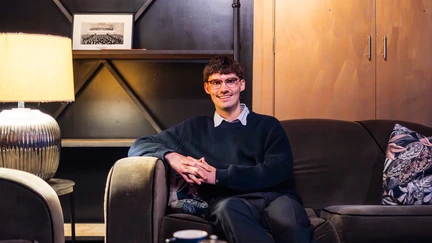
Photo supplied
Fergus Kisby-MacLeod, General Manager of the Penthouse Cinema
The art deco curves the Penthouse cinema have been an iconic part of the Brooklyn landscape for nearly nine decades. Opening in June 1939 as Aotearoa moved out of the depression era and towards taking part in a second world war, the Vogue Theatre, as it was then known, was hailed as “an ultra modern suburban theatre”. With 622 seats the management guaranteed “a perfect view of the screen from every seat in the theatre” (Source: Papers Past, June 1939).
24 years later, blaming the advent of television, the Vogue closed and the then manager bought the building for the full time production of television commercials. In 1975 the building was bought by Merv and Carol Kisby, refurbished and renamed as the Penthouse and returned to being a suburban cinema.
Fifty years on, and as the Penthouse inches towards its ninetieth anniversary, in Wellington City Libraries latest local business interview we chat with Fergus Kisby-MacLeod, the third generation of the Kisby family to be Penthouse kaitiaki.
WCL: Tell us who you are and what your role is here at the Penthouse?
FKM: My name is Fergus Kisby-McLeod and I am the General Manager of the Penthouse Cinema. That involves seeing to the long and short term direction of the cinema. I manage the staff, I manage community partnerships, which are really important to us, I manage the building and also all of our fundraising groups and marketing. I wear all hats, to be honest.
I’m kind of just that family representation - being the face of the business from this year onwards.
WCL: Is that how you’ve learned? On the job? Or do you have a qualification in cinema management?
FKM: You pick it up because it is a lifestyle being in a family business When mum and dad come home, you hear everything that's happening at work and you pick up on certain things that they do well and then things that I think that I could probably do better.
I started when I was fifteen. I kind of worked my way up from dishwasher to front of house and then kind of helping mum and dad manage the business. So that's something I've always been quite passionate about .
WCL: What’s it like to be the third generation of your family responsible for such an iconic Wellington cinema?
FKM: It's a great responsibility, but I love it. I think it's extra special that it's been in the family for so long, and then I can put my touches around the place and kind of bring it back to life. I think it's been tough the last six, seven years, to be honest. I think this year is definitely the most positive one that we've had in a while.
WCL: Tell us a little of the history of the Penthouse and your family involvement with it.
FKM: My family has always been in the movie industry and my granddad, Merv Kisby, originally had a theatre in Pahiatua. Then the family moved down to Wellington and my grandparents Merv and Carol Kisby along with their kids, Mark, and my mum, Sandra, set up and ran the Paramount theatre, down on Courtney Place. Then in about 1975, my granddad was wanting something a bit different. He started looking around buildings. This site in Brooklyn popped up. It used to just be the one cinema and it used to be a film, like a TV studio, recording site. From there my mum took over the Paramount while they were transitioning over to the Penthouse here in Brooklyn. This was kind of like my granddad's baby. When my granddad passed away in 1999, my mother took it over.
Since then, all the changes that we've done, from the original one cinema site, has been in light of the unique art deco unique theme of the cinema. We’re trying to keep that character. Since then it's just been family run. So my mum and my dad and my three brothers, and sister all worked in the business.
WCL: Are you an independent cinema or have all the independent cinemas grouped together?
FKM: We’re not a group but we're definitely in conversation with them on industry trends, how they're going. We're pretty well connected. All of the independent cinemas are quite friendly with each other.
WCL: How does it work when you do something like the French Film Festival? How do you all agree to who's going to show what?
FKM: Most of the time distributors come to us with their films and festivals and then they give us a schedule. Then we can say if it works for us or not. For example with the French Film Festival, Limelight distribution is owned by the Lighthouse cinema. So they allocate all the session times and we just pretty much say yes because it's great for business.
We love French Film Festivals. We love our festivals in general and we love those kind of movies because that kind of really speaks to what we are as a cinema instead of those blockbuster movies. Those ones that have a little bit more deeper meaning, that you have to see in a cinema.
We’re a little disappointed to have been excluded from hosting the International Film Festival in recent years, given our family’s long history with the festival. Merv and Carol Kisby hosted the first ever International Film Festival at the Paramount in 1972 and there are strong ties between the Penthouse, the Paramount, and the festival’s beginnings in Wellington. We’d love to get back into the New Zealand International Film Festival, and we're working through that at the moment.
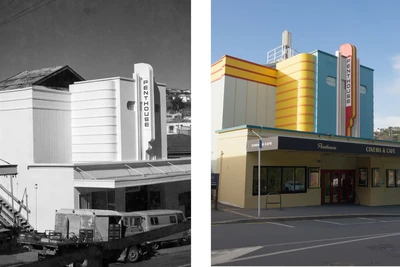
Photo 1: Photograph by Charles J Fearnley from WCL Recollect Reference50003-2214
Photo 2: Courtesy of Penthouse Cinema
Then and now: the exterior of the Penthouse in 1977 and 2026
WCL: The outside of the Penthouse has had a facelift recently – any plans for internal change?
FKM: Yes, for sure. We've recently upgraded all the heating in all the cinemas. And we’re renovating our front two rooms in the next couple of weeks. We've just got new chairs in the cafe for the first time in twenty years.
And lots of painting touch-ups, just kind of making the place feel a little bit more vibrant. It did get a little bit tired in the last five to ten years so we’re bringing it up to a standard so it feels loved.
There’s an interesting story about the facade we had. Our original colour consultant walked through the doors in December last year and she offered all these old posters and design work of what she did in 1975. I kind of had a light bulb moment and thought why don't we do it again. So we got some funding together and then in January it got painted back to the original colour scheme of the 1975 building. I think my granddad would really like to see that. It's quite special. He introduced the colours because before that it was really pale and dull. In 1982 I think it was, it got painted and since then it just kind of faded.
We’re trying to make the cafe more of a destination place as well. So we’re looking at the menu and getting a new chef, and we're redoing our wine selection. We're just trying to make it somewhere that you go just as a cafe or get some food or a glass of wine instead of just coming to the movies.
WCL: There are now four separate cinemas within the building, from the original one. How many do you seat across those?
About four hundred. It's actually smaller than the original Vogue which had over 600 seats when it opened in 1939.
Cinema one is still in the same kind of layout to an old fashioned cinema. It's a little bit more landscape than portrait, is the best way to describe it. It's a lot wider and not as deep as some cinemas go. It's kept the same layout as since we first opened.
WCL: The Penthouse has long been associated with an older demographic in part because its suburban. Are you aiming to attract a younger vibe?
FKM: We have to. I am very happy with our current audience and very grateful to have such a loyal audience. For a lot of them, it is the highlight of their week that they come. They keep on coming, they keep supporting us and their support means so much, especially in tougher times.
But myself and the management of the cinema are definitely looking to diversify and trying to cater to more audiences, especially when people are looking for more unique experiences these days.
I think a lot of people, especially new to Wellington, don't know that we're here.
So, we're actively working on trying to entice different audiences with deals and giving group discounts.
We do a lot of fundraisers for community organizations.
That's one of the big things that we pride ourselves on, giving back to the community. So getting those types of groups in first, and if they really like it, then obviously they're going to come back and support us more often.
WCL: Do you think Wellington has a unique movie going culture? Are we supportive of our indie cinemas?
FKM: I don't think independent cinemas get support as much as they used to. But if you look at our independent cinemas around Wellington, they're definitely unique in terms of the whole country. I don't think you have as many diverse and unique experiences anywhere else in the country.
I do think that we do have a unique cinema kind of film culture in Wellington. It's really cool. And I would like to see more support in terms of that because we do lots of short film screenings for our young filmmakers as well. They come in and they get the cinema free of cost to show their films on the screen and see it in a big cinema. We love to do that. We love to support young filmmakers.
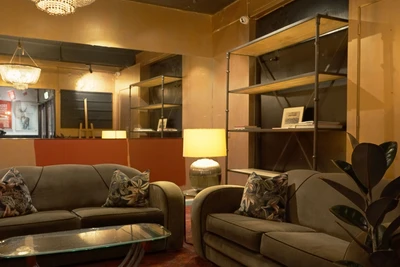
Photo supplied by Penthouse Cinema
Art deco furnishings in the Penthouse foyer
WCL: What’s the enduring appeal of cinema in this age of large tvs and streaming services?
FKM: I think it's a unique experience. People especially want to change their habits of just staying at home. The market for films on streaming services have been saturated so much because they're just trying to make a catalogue of films instead of making good films, quality films. So that's been the shift there.
People want to come out and actually watch the movie instead of being distracted on your phone or getting up to do your laundry or something like that. Just getting into a cinema, relaxing for two hours, having a social experience, talking to your friends about a movie, going with your family, it can be a treat for especially the older generation every week or every couple of weeks.
I think people are starting to get back into their different the habits pre Covid, going out, supporting businesses, having good experiences instead of just sitting at home because you probably do get bored of just sitting and watching the same old stuff on streaming services.
You just need to relax, enjoy a story, enjoy the experience for what it is. And I think that's what's so special about the movies that streaming can't replicate at all.
WCL: Other than relevancy, what other challenges are there for you?
FKM: All of the costs had gone up prior to COVID, but business is worse. So if you think about wages, heating, rates, insurance, all those underlying costs that you need to stay operating as a business have gone up. But business has gone down.
The writer’s strike about two or three years ago was a really tough couple of years for us because no one was making films. I don't think people really knew about that. And we're looking at our schedules thinking, “What are we going to show to people that they actually want to come to”? My mum is the perfect kind of target audience for our audience, and if she doesn't want to schedule a film or put a film on then we don't feel confident in our business.
So trying to maintain the cinema and maintain that experience while all these things are happening becomes very hard. And sometimes you do just have to accept that you're gonna be out of pocket for it.
But as long as people are having a good experience, I think that's the main focus of the year. It is difficult, especially when there's a lot of bad press around Wellington.
And I think people saying bad things about Wellington affects Wellingtonians because then they go, oh, it's bad, but I don't think it's as bad as people say it is. I think there's a lot of positive things that are going on in Wellington. After doing the facade and doing these changes, I'm feeling really positive about business this year. People are coming out and doing things and it's a lot better than people say. And I think the next few years is the best years.
WCL: You’ve talked about strengthening the Penthouse role as a community hub here in Brooklyn. How are you developing that?
FKM: We already work really closely with the Brooklyn community centre and we work closely with Brooklyn school. I think in the last few years though, because of those reasons of trying to keep the cinema running and all that kind of stuff, we've kind of gone away from actually paying attention to what's going on in the community because it is a small community hub and we are seen as that big business in Brooklyn.
I've been out and talking to other businesses and community groups and what they want to see in the cinema.
We introduced a local residents rate for the Brooklyn residents, so that brought in a few people. We're hosting book clubs, yoga groups, babes in arms, those kind of local small community groups.
And we do a lot of fundraisers for the Brooklyn sports clubs. We've just introduced this two for one ticket deal where we give two for one tickets out to their community organizations that they can give it out to their members. We've done that with the Brooklyn cricket club and the Brooklyn Football Club. We've done it with all the businesses in Brooklyn so they can hand it out to their customers. My main goal for this year is to get people through the door, to see that the place is feeling livelier again when they come and then they’ll come again.
WCL: Out of interest how many people do you employ here?
FKM: 28. Twenty are part time. It’s not always easy but we have a good team at the moment.
WCL: You did a thing a couple of weeks ago with food trucks in the car park? How did that go?
FKM: It was a really good response. I want to use all of our spaces for different purposes other than just movies. So that's one of my ideas. We're looking at potentially getting some outdoor seating there for spring and summer so people can sit down in the car parks. It's quite good sun.
I've thought of potentially doing an outdoor movie thing like a drive in movie. I think it would be pretty cool.
But stuff like markets and food trucks. I'm all for that. And just giving back. That kind of stuff is great for the community. Just getting people out and just around the cinema.
WCL: You’re just a few years short of celebrating the cinema’s 90th birthday – do you plan any special events?
FKM: We are thinking about plans, but it still is quite far away. We’ve just got to get through the next few years first. We’re thinking pretty much week to week at the moment in terms of operations. So trying to get those big picture ideas going is a bit difficult.
WCL: Is there anything you would like to tell us, Fergus, that you would like people to know about running a cinema and particularly this one and its role in the community?
FKM: Running a cinema is becoming increasingly hard, but we're very positive about the future. And it's really important, I think for people to realize just that.
The impact that you have by supporting small businesses is really big. That's what's so special about Wellington.
And if you don't have these small businesses, then the character of the city kind of fades away.
Support for big developments down in Courtney Place for like a Readings or something like that, we know that's going to take away from our business. So that's why we just say get out and support small local businesses.
Check out these movie-themed resources in our collection:
- The secret life of movies : hidden hints, motifs, references and background detail in the greatest movies by Simon Brew, 2019
- Film quake : the most disruptive films in cinema by Ian Haydn Smith, 2021
- The history of cinema by Geoffrey Nowell-Smith 2017
- Where to go on Saturday Night : Wellington Cinemas and Movie Halls, 1896 - 2000 by Stuart Anthony [Tony] Froude, 2000 [Recollect digital resource]
- The big screen : the story of the movies by David
Thomson, 2024. Also as ebook - An anarchist at the movies : an anthology of reviews (2004-2026) by Barrie Sargeant, 2026
- The 12-hour film expert : everything you need to know about movies by Noah Charney, 2024