Guest post: Everyone is addicted to something
Wellington leadership coach and mindfulness expert, Kerene Strochnetter, shares an excerpt from her new book, Little Addicts.
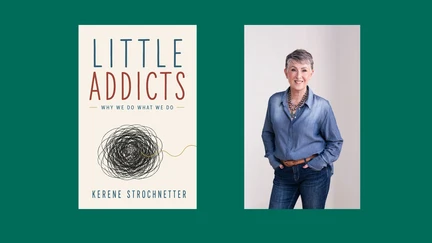
Images courtesy of author
In Little Addicts, Kerene Strochnetter explores the hidden patterns behind the behaviours we repeat, even when they quietly cost us our peace, relationships, health, or happiness.
Chapter 1: Everyone is addicted to something
“We are the most in-debt, obese, addicted, and medicated adult cohort in U.S. history. The problem is that we are numbing discomfort, and we’re losing our capacity to feel joy.” – Brené Brown
Let’s stop pretending.
Addiction isn’t as rare or as obvious as we like to think.
Most of us imagine addiction as chaos: loss of control, rock bottom, lives falling apart. But addiction often looks nothing like that. Sometimes it looks calm, capable, and composed. High functioning. Successful. Always ’on’.
I believe we’re all little addicts, not because we’re broken, but because we’re human. Every one of us reaches for something to soothe discomfort, steady ourselves, or feel okay when things feel uncertain or overwhelming. Sometimes it’s a substance. Often, it’s a behaviour. Frequently, it’s something society quietly rewards.
Your nervous system is built to find relief, fast. The real risk lies in the slow tilt from “this helps me cope” to “this runs me”. When coping becomes automatic and rigid, what once steadied you can quietly start to shape – and shrink – your life.
Addiction hides in plain sight.
It shows up not only in substances or screens, but in behaviours we reward and applaud: perfectionism, people-pleasing, overworking, staying in control. Sometimes addiction looks less like self-destruction and more like relentless self-management.
Underneath though, the mechanism is the same.
Addiction is what happens when ordinary coping strategies harden into habits we rely on to soothe discomfort, avoid pain, or feel more in control. It’s an attempt to manage the ache of being human. Underneath these patterns are a few deeply human tendencies that shape how we respond when life feels uncomfortable. We’re wired to move away from pain, toward what feels good, and to make uncertainty stop as quickly as possible.
At the core of these patterns are what I call The Big 3 – three factory settings that drive how we respond when life feels uncomfortable. The brain naturally wanders, scans for what might go wrong, and tries to escape discomfort. That wiring evolved for protection, not for peace of mind. But in modern life, these same tendencies can quietly organise our behaviour without us noticing. Left unexamined, The Big 3 steer us toward short-term relief over long-term alignment. The habits we struggle to change often persist not because we lack willpower, but because they are simply doing what they were designed to do.
In a world that offers instant relief at every turn, we’re all experts at avoiding discomfort. When something feels unpleasant (boredom, loneliness, stress, uncertainty), we reach for relief. Food. Alcohol. Phones. Work. Approval. Distraction. Why wouldn’t we?
That’s when the relief starts to backfire, when what once soothed now leaves you feeling worse. You can see the cost, but stopping isn’t as simple as deciding to.
This book is about addiction, but not the kind we usually talk about. Not just the “big A” addictions that draw a clear moral line. It’s about the sneaky little ones that quietly keep us stuck.
The addictions we don’t recognise as addictions.
Work. Scrolling. Over-exercising. Perfectionism. Being endlessly busy or endlessly pleasant. Avoiding conflict. Saying yes when you mean no. Anything that helps you not feel what’s going on inside.
These habits are often socially sanctioned and rewarded. Promotions. Praise. Gold stars. Until we’re exhausted, resentful, and quietly wondering why, after all the effort, we still don’t feel okay.
I know this terrain well, personally and professionally.
I consider myself a little addict. I never thought of myself as addicted to alcohol. I didn’t drink much. But I craved red wine every evening. I built my routines and social life around it. Life felt better with a glass of red in my hand.
Noticing that craving stopped me in my tracks and once I paid attention, I began to see other patterns creeping in too: scrolling, retail therapy, people-pleasing. None of them dramatic. All of them familiar attempts to soothe discomfort and feel better.
Like many people, I used to think addiction was something other people had. The extreme versions. The obvious ones. But addiction isn’t always loud or catastrophic. Many high-functioning people are excellent at hiding it, especially when society rewards that behaviour.
‘Big A’ and ‘little a’ addictions sit on the same continuum. What differs is how visible they are and whether they’re socially or culturally approved.
Addiction has nothing to do with intelligence, success, or strength. It’s not about what you’re using or doing. It’s about why you’re doing it and what it’s costing you.
Addiction is bad for us, not because it makes us immoral, weak, or out of control, but because it quietly narrows our lives. Whether it’s alcohol, vaping, scrolling, porn, food, work, busyness, or approval-seeking behaviour, the pattern is the same: we hand over our capacity to choose in exchange for short-term relief. Over time, the world shrinks to whatever soothes us fastest. Our tolerance for boredom, discomfort, uncertainty, and emotional pain erodes, along with our ability to feel deeply engaged, alive, and present. What begins as comfort ends up costing us.
Not all at once, but in small, daily withdrawals from our attention, energy, relationships, and sense of meaning. That’s the real harm. Not collapse, but contraction.
I’ve worked with hundreds of capable, successful people who look like they’re thriving from the outside, yet carry a quiet sense of pressure, emptiness, or dissatisfaction beneath the surface. Almost without exception, they’re doing something to cope. That’s human.
Because I work mainly with leaders, I see how this scales. If you lead others, your coping doesn’t stay personal; it multiplies. Avoiding conflict, becoming defensive, seeking approval, self promotion, controlling and shutting down, or micromanaging. These may feel like private survival strategies. They’re not. Teams absorb them. Psychological safety erodes. Ownership drops. Energy saps. Performance follows.
Culture is often a reflection of whatever the leader is unwilling to feel.
And this isn’t just about leadership. It’s about being human. Whether you run a company, a team, a household, or simply your own life, the patterns you lean on shape more than the moment; they shape your future.
This book is for anyone stuck in habits that feel good now but may cost you later. Not because you’re weak or broken, but because you’re human: wired for comfort, safety, pleasure, and connection.
And if you’re willing to look honestly at what you reach for when life feels uncomfortable – the things you do, not just the things you take – something powerful becomes possible.
Change doesn’t start with willpower. It starts with awareness.
Which brings us to the real question:
Is what you’re doing helping you live the life you want, or helping you escape it?
Key takeaways:
- Everyone’s addicted to something: substances, screens, shopping, being seen as ‘fine’.
• Addiction isn’t about how bad it looks, it’s about what it costs you.
• You’re not broken, you’re just a human trying to outsmart discomfort.
Little Addicts: Why We Do What We Do
by Kerene Strochnetter, 2026
Kerene Strochnetter is a leadership coach, mindfulness expert, author, speaker, and host of The Little Addicts Podcast. For more than 20 years, she has helped leaders and organisations create lasting behavioural change through greater self-awareness, emotional intelligence, and values aligned leadership. She is the author of Crazy Busy — If Busy is the New Stupid, Then Mindful is the New Smart, founder of Mindful at Work, co-author of wellbeing programmes for the Triple Goal app, and supervises other coaches in their professional practice. Kerene’s work brings neuroscience, psychology, mindfulness, and humour together into practical, down-to-earth conversations that help people interrupt the patterns and quick-fix behaviours quietly running their lives, creating space for more courage, clarity, and self-compassion. That work sits at the heart of Little Addicts.