Another month rolls around and we have a bumper crop of new biographies and memoirs for you. Entertainment, art, literature, history and more, it’s all there in our latest acquisitions to the collection.
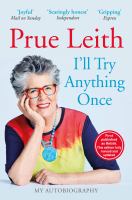 I’ll try anything once : my autobiography / Leith, Prue
“The memoir of restaurateur, food writer, business woman and novelist, Prue Leith, whose refreshing charm, humour, energy, and zest for life remind us of what is possible.” (Catalogue)
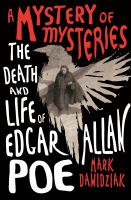 A mystery of mysteries : the death and life of Edgar Allan Poe / Dawidziak, Mark
“A Mystery of Mysteries is a brilliant biography of Edgar Allan Poe that examines the renowned author’s life through the prism of his mysterious death and its many possible causes. By debunking the myths of how he lived, we come closer to understanding the real Poe and uncovering the truth behind his mysterious death, as a new theory emerges that could prove the cause of Poe’s death was haunting him all his life.” (Adapted from Catalogue)
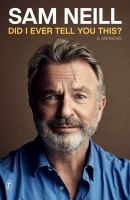 Did I Ever Tell You This / Neill, Sam
“In this unexpected memoir, written in a creative burst of just a few months in 2022, Sam Neill tells the story of how he became one of the world’s most celebrated actors, who has worked with everyone from Meryl Streep to Isabel Adjani, from Jeff Goldblum to Sean Connery, from Steven Spielberg to Jane Campion.” (Catalogue)
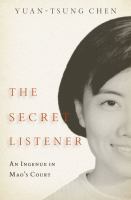 The secret listener : an ingenue in Mao’s court / Chen, Yuan-tsung
“The history of China in the twentieth century is comprised of a long series of shocks: the 1911 revolution, the civil war between the communists and the nationalists, the Japanese invasion, the revolution, the various catastrophic campaigns initiated by Chairman Mao between 1949 and 1976, its great opening to the world under Deng, and the Tiananmen Square Massacre. Yuan-tsung Chen, who is now 90, lived through most of it, and at certain points in close proximity to the seat of communist power. A first-hand account of what life was like in the period before the revolution and in Mao’s China, The Secret Listener gives a unique perspective on the era, and Chen’s vantage point provides us with a new perspective on the Maoist regime.” (Adapted from Catalogue)
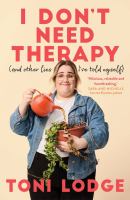 I don’t need therapy : (and other lies I’ve told myself) / Lodge, Toni
“When Toni Lodge sat down to write this memoir, she discovered that the lies she was telling herself were hiding some pretty important home truths-about her work, her identity and her mental health. Her dogged pursuit of these truths sent her on a brazen exploration of everything from gastro, fame and Twilight to funerals, the Dalai Lama and Brazilian waxes. In this hilarious warm hug of a book, Toni exposes the lies she has told herself about who she is and what she is capable of, inviting you on a riotous romp that will make you laugh, cringe, cry and utterly rethink the truth behind the stories we tell ourselves.” (Adapted from Catalogue)
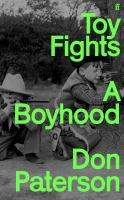 Toy fights : a boyhood / Paterson, Don
“This is a book about family, money and music but also about schizophrenia, hell, narcissists, debt and the working class, anger, swearing, drugs, books, football, love, origami, and the peculiar insanity of Dundee, sugar, religious mania, the sexual excesses of the Scottish club band scene and, more generally the lengths we to not be bored.” (Catalogue)
 Vera Brittain : a life / Berry, Paul
“Writer, pacifist and feminist, she condemned her provincial background but remained acutely conscious of the conventional elements in her own character; she revealed a richly emotional life in her writing but was outwardly sober and reserved; she possessed a fierce desire for fame and recognition but was ready to sacrifice both on matters of principle. This biography – comprehensive, authoritative and immensely readable – confirms Vera Brittain’s stature as one of the most remarkable women of our time.” (Adapted from Catalogue)
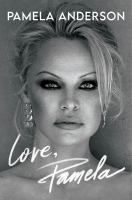 Love, Pamela / Anderson, Pamela
“Pamela Anderson’s blond bombshell image was ubiquitous in the 1990s. Love, Pamela brings forth her true story, that of a small-town girl getting tangled up in her own dreams. Eventually overcoming her natural shyness, Pamela let her restless imagination propel her into a new life few can dream of, Hollywood and the Playboy Mansion. Now having returned to the island of her childhood, after a memorable run starring as Roxie in Chicago on Broadway, Pamela is telling her story, a story of an irrepressible free spirit coming home and discovering herself anew at every turn.” (Adapted from Catalogue)
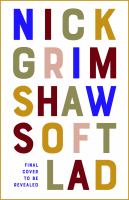 Soft lad : a collection of stories (about me) / Grimshaw, Nick
“Soft Lad is a collection of stories about me: stories on life, loves, death, fears, obsessions, nights out, growing up and making dreams come true. It isn’t chronological like a traditional memoir, starting at birth and ending with death – I’m still (at the point of writing) very much alive – but snapshots of the formative moments of my life up to now, with coming-of-age tales that capture a moment or a feeling. Some, I hope will make you laugh, and some, are emotional AF, so I’m afraid these might make you cry… They’re all honest, unfiltered and I’m proud to be sharing them with you.” (Catalogue)
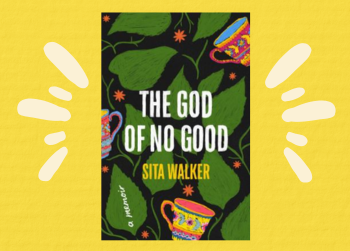
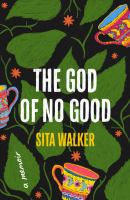 The god of no good / Walker, Sita
“Sita Walker was raised by five strong matriarchs who taught her to believe in God and to be good. Her grandmother, mother and three aunts believed in unshakeable faith, in the power of prayer, in sacrifice, in magic, in the healing of turmeric and tea, and the wisdom of dreams. But as hard as she tries to be good, Sita always suspects that deep down, she isn’t very good at all. Traversing decades and continents — from Iran to India, Sri Lanka to the Czech Republic, Adelaide to the Torres Strait — The God of No Good is a beautifully lyrical and funny intergenerational memoir about six women and how their lives intertwine.” (Adapted from Catalogue)
For more new books, go to: What’s new & Popular / April 2023 (wcl.govt.nz)